Saturday, March 29, 2014

Being a Child Actor In a Long Running Show


Me right before I started work on "Mary-Mary."

My childhood headshots

With the proliferation of musicals starring children on Broadway, a lot of people have asked me what it was like being a child in a long running show. When I was 11-13 I did about a year long run (it might have been a little longer,) of a musical called “Mary-Mary.” We primarily performed in Los Angeles, but I also went with the show to the UK, touring to London, Warwick and Stratford. The show was a kind of modern “Alice in Wonderland” esque story involving a cynical, grown-up before her time young girl named Mary-Mary, and a host of fantastic fairy tale characters. I played Mary-Mary alternating with mainly one, but for a short while with two other girls, (though I did the majority of performances.) I was the youngest person in the cast - I was always a kid who looked older then I was, so I was the only Mary-Mary who was truly playing my own age. The others were older and looked younger. The other Mary-Mary's and I were never at the theater at the same time. 


I loved doing “Mary-Mary.” It will always be one of my theatrical highlights. Interestingly in real life I was much more like the end of the show Mary – I was in some ways a very innocent twelve year old, very imaginative, and I saw the world in magical ways. I think I still do. My acting abilities were primarily challenged in the first half of the show when Mary is much more jaded and “cool” then I was. I had a very strong grasp of acting – I was in my first play when I was five, and had been taking acting classes ever since. I grew up in L.A and got an agent when I was seven. By twelve I was an old pro. I was very fortunate that I was treated as such. I have friends who were also child actors, and many have horror stories of the kinds of things directors would do to manipulate a performance out of them (that old chestnut about a kid being told their parents are dead to get them to cry is much more common then you might think.) Largely thanks to a wonderful mother, and the fact that I received legitimate acting training I was very blessed to always be treated as an equal actor, and never had any traumatizing incidents. 

“Mary-Mary” was a big responsibility for me. I only left stage twice the whole show, and I was speaking off stage during both exits. I had to be at the theater very early to get ready and warm up before the performance(s.) I used my own hair in the show and had it French braded (two braids, just like Dorothy.) I liked the other people who worked on the production very much. Ironically, maybe this is true to an extent with all performers, but especially children, I remember my relationships with the other characters as separate from my relationships with the other actors. Although I certainly missed everyone when the show ended, I almost missed some of the characters more then the actors themselves. Like they had been real people in a way. The actors I knew I could always see again, but I would never again be able to talk to, and interact with the characters I loved so much. Mary was sometimes closer to a character onstage then Ashley was in real life with the actor who played them.

I’m glad I did my first long run as a child. Children are by nature in the moment, something essential to surviving a long run, and now I have a paradigm to bring to a long run as an adult. But even as a child it did get difficult to keep the show fresh after a while (though probably after a much longer period then one would think, it does take a decent amount of time to really get into the groove of a new show.) I began to set little challenges for myself to help keep things feeling new. One show I might filter things through Mary’s sadness, the next her anger. One show I might play her as a little girl pretending to be older then she is, the next as a girl who really had to grow up too fast. I never did anything that really changed my performance, just little thoughts I kept in the back of my mind to keep things interesting for me.

One thing that really did help keep things fresh was when new cast members would join the company. As wonderful as everyone was, an especial favorite cast member for me was Rachel who replaced the adult lead in the show a few months into the run. Not only was Rachel a former acting teacher of mine, but she was a close family friend. She and her family came over for dinner at my house, and my mother and I went over to hers. I spent most of my time onstage with Rachel’s character, who becomes like a mother to Mary during the course of the show. I felt the same way about Rachel offstage as on, and it was very special for me to get to perform with her.

I remember discovering things about the show and Mary right through the final performance. Every time a new cast member came in with a slightly different take on the role, I started to see new things in the play I hadn’t thought of before. Rachel played her role in a very maternal way, Cheryl was much more zany – kind of your kooky aunt, and Evelyn was closer to a Mary Poppins esque interpretation. Each made me see the show differently, and my Mary became different in response to these three actresses.

Though I was ready for a break by the time the show ended, I was so sad when it was over. I think when you’re a child actor there’s a kind of axe hanging over you – the knowledge that you have a very limited amount of time to play a certain role, and then you’ll never be able to play it again. I cried the day I realized I was officially too old to play Annie. lol. By the time I finished my run in "Mary-Mary" I barely fit into the costume – I was getting tall and the costume was stretched to maximum capacity. The adults could play these roles for years, but I knew I was a ticking time bomb. You’re far too aware of growing up when you're a child stage actor, whether you feel grown up or not. (I think in film and TV it's sometimes the opposite. You're kept a little girl far longer then you should be.)

“Mary-Mary” was a haven for me. My family and I were going through hell in real life, but doing the show I, in a way, felt like I got to step into a fantasy world and be with characters I loved, and who loved me. There’s something magical about being in a show when you’re a child. But it’s also made very clear that you’re expected to be just as professional as the adults in the cast. Show wise I was never treated any differently from anyone else. I didn’t have a child wrangler like many shows involving children do – I was completely responsible for getting myself ready on time, taking care of my costume while I was wearing it, making all my entrances and maintaining a consistent performance. Socially however, I was treated very differently.

I was at that age where I really looked up to the older girls in the cast. I always wanted to do what they were doing. This was especially a problem when we were in the UK where my parents weren’t with me and, though I certainly had people with the production looking out for me, didn’t have someone whose responsibility it was to be with me all the time. During the day I was the cute kid to have around. At night no one wanted me tagging along. I was not invited to girls nights in the hotels where they would slather on face mask and talk about the boys they were dating/sleeping with in the cast. There were a lot of places I was just too young to go to, and I had to all but beg borrow and steal to get someone to take me to a museum, etc. on our time off as I wasn’t allowed to go anywhere on my own (keep in mind, this is in the era before laptops and texting. I couldn't distract myself with fun youtube videos or DVDs, and I had to use the hotel pay phone to call my mom - more often we exchanged good old fashioned correspondence.) I spent a lot of time alone in my hotel room desperately missing my mom. This was an especially interesting dynamic as I was playing the lead in the show, and was doing various press things, photo shoots that other cast members weren’t always involved in. Show wise I was one of the highest on the "totem poll." Socially I was the lowest. On a side note, this was in the days before everything was on the internet, so most of our press still only exits in good old fashioned scrap books of clippings and articles – there aren’t links I can post. I got good at the art of doing interviews (the secret: answer the question YOU want to answer, regardless of the question the interviewer poses to you.) I remember one time in L.A. the whole cast decided to have a movie bonding night, and we went to go see “The Crucible” – a movie I had already seen with my mom, and loved, especially because it was theater related. I remember being humiliated when we got to the theater and the box office worker deemed me too young to go into the theater, and was going to make me stay outside while the whole rest of the cast went in. Finally one of my favorite cast members talked the box office attendant into letting her count as my guardian and give her permission for me to see the movie, but I went from feeling like one of the cast to feeling like the silly baby instantaneously.

Things weren't much better back at school. Especially in L.A there can be a lot of jealousy when you're a child performer. I remember one day in the sixth grade I had to miss a day of school in order to do an invitational performance (a special matinee show where, usually, schools are invited to attend as a way to supplement a lack of arts education.) It wasn't until the eleventh hour when the producers realized that one of the groups coming to the invitational was my sixth grade class. The kids thought it would be really funny to try and embarrass me as much as possible including yelling "Ashley, you suck!" during the show, and trying to trip me when I had to make an entrance/exit down one of the aisles. 

I was never exposed to anything really bad doing the show (again I know horror stories from other kids,) but I found myself a not quite comprehending bystander on the periphery of some drama on more then one occasion. There was a drug incident in the cast – we all got a big lecture about professional behavior from one of the producers where the word “drugs” was never explicitly used, after which I apologized to him if I had done anything wrong. He smiled and said this had nothing to do with me. I had to beg one of the cast members to tell me what was going on. There were also a multitude of hook ups in the cast. I remember feeling in a weird, twilight-zone place of at once being horrified finding out that some of the people I looked up to were sleeping around, cheating on their significant other who was ALSO in the cast, and feeling vaguely jealous that I seemed to be the only one no one wanted to date. I remember being all but traumatized our first night in London when the company had gotten tickets for the West End play “Popcorn” – a brilliant work that no twelve year old should be watching, and, on the flip side, being in seventh heaven watching a WWII era “Hamlet,” and “Cymbeline” at the RSC. To this day “Cymbeline” is my favorite of Shakespeare’s Romances. I loved being in the UK, and I’m dying to perform there again.

But don't get me wrong, I loved acting as a kid! I was the one begging my mom to take me on auditions. Being onstage was the happiest I ever felt. It gave me an incredibly constructive way to channel my feelings, and on the practical side it gave me many life skills. I'm great at dealing with rejection. I actually think it's a good thing for kids to start being exposed to rejection early. When I was seven I didn't remember most auditions I did after I did them, so hearing a week later from my mom that I didn't get that snack commercial didn't leave me devastated, I usually responded with: "Oh, did I audition for that?" Pretty soon it just became an accepted part of life. You do your best, and a lot of times you don't get the gig, and it has nothing to do with you. I got really good at interacting with adults (though I was far more comfortable with people who were older then me then my peers anyway.) I learned about professionalism - if I was tired I couldn't just not show up to work, because it would affect a lot of people. I learned very early that my actions affected many more people then just me, and that it was far better to be a team player. 

I remember, the only time I’ve ever missed an entrance was in “Mary-Mary.” My entrance for act 2 was through the audience, so at the "places" call the rest of the cast would go backstage, and I would wait to get the call that the lobby was clear and I could go to the front of the house. One show I started to feel like intermission was going on for a really long time, so I snuck a look out at the lobby and saw that no one was out there. I cracked open the door to the theater and was horrified to see that the cast was halfway through the opening number and was standing frozen onstage while the music played for my solo. I had the first line after the song was over, so I just made my entrance on that line. After the show I got a serious talking to by the director before the stage manager discovered that the monitors were out and I never got my places call.

I really enjoyed meeting fans by the stage door after the show. There were lots of little girls who loved Mary like I did (I actually saw the show years before I was in it, and always wanted to play Mary.) A lot of young girls would celebrate their birthday by coming to the show, and I always felt so honored to be a part of something that was so special to so many people. 

A few years later as a high school junior backstage at a show.


"Mary-Mary" reunion with Rachel. (I'm a lot taller now :)) 


Monday, December 30, 2013

Wednesday, December 25, 2013

Merry Christmas 2013!

Merry Christmas everyone! (And happy holidays! Though since Hanukkah was so early this year technically this is the only holiday left I can wish you a happy/merry of. Except for New Years. But I'm too early for that so... :))

I promise I will have a new post up soon! I've been really crazy with pre production for a couple of projects, so please forgive the long absence. But I will have lots of fantastically interesting things to read soon!

xoxo ~Ashley

Saturday, July 6, 2013

Top 5


A director friend of mine asked me to do a blog of my “top 5’s” – my top five favorite/most influential plays, films, TV shows, etc. A few other people have asked me the same question periodically, so I thought I would write them down, with a brief discussion as to why I like them so much. I find that some of my “top 5’s” are somewhat random and obscure, and if nothing else, I would love share them in the hopes that others might check them out.

PLEASE NOTE: These are my personal top five lists. This is not intended to be a list of the shows, etc. I think should be on everyone’s top five list, and I am certainly not arguing that they are the best films, plays, etc. of all time. They are the shows etc. that have had the greatest influence on me, that I love the most, and watch/read again and again. I believe strongly in their artistic excellence, but am writing this as a personal taste list. Not a world wide definitive list. Some are in order of preference, some are not.


Top Five (Non Shakespeare) Plays
(In order – with #1 being my favorite)


1.)   Our Town” – by Thornton Wilder (I was very fortunate to first be exposed to this play by seeing it (when I was about nine) and not knowing anything about it going into it. I think this play can easily get ruined by forced reading in school. Experiencing it live at an early age left a huge impression on me.)
2.)   The Pillowman” – by Martin McDonagh (This brilliant dark comedy about a writer in a totalitarian state being interrogated about the similarity of several recent child murders to the plots of his short stories had a tremendous impact on me when I saw the original Broadway production (several times.) Exploring the nature and power of storytelling this piece left me deeply moved, and thrillingly frightened - and inspired me to literally read Mr. McDonagh's entire body of work.)
3.)   Eurydice” – by Sarah Ruhl (One of the most beautiful shows I've ever seen - "Eurydice" tells the myth of Orpheus from Eurydice's point of view. Set in an Alice in Wonderland-like Hades, in Sarah Ruhl's hands the story becomes about the nature of love between a father and a daughter just as much as between Orpheus and Eurydice. The beautiful scenes where Eurydice doesn't remember who her father is, but he knows her all too well are heartbreaking. And the piece plays with the beauty of language in a way not found in many contemporary plays.) 
4.)   Arcadia”- by Tom Stoppard (Fun fact: the wonderful background music by Corin Buckeridge is the ringtone on my phone) (I first saw this show when it was revived on Broadway in 2011. Oddly knowing nothing about it going in (I went to see a friend who was in the cast,) I was mesmerized by the story and language. Set in the same house following two interconnected stories set over one hundred years apart - "Arcadia" is a challenging play, and that's one reason I like it so much. It intellectually challenges me every time I see or read it. The theme of the things we hold most dear never really being lost is stunningly revealed, and the play elevates math to the stuff of poetry.
5.)   Frankenstein” adapted by Nick Dear for the National Theater of Great Britain. (This adaptation in which Benedict Cumberbatch and Johnny Lee Miller alternate in the roles of Frankenstein and The Creature really goes back to the heart of the source material, but tells the story principally from the Creature's point of view. Genius acting, direction, and design come together in one of the most stunning pieces of theater I've ever seen - taking such beautiful risks (the first 15 min. or so is all but completely silent physical work performed by the Creature - expressed in the script by the single stage direction (paraphrased): The Creature comes to life. This show is part of the National Theater Live series and has had encore performances all around the country. I highly suggest checking it out.


Top (Four) Shakespeare Plays
(I’ve divided it up into my favorite in each genre – hence four instead of five.)


Tragedy – “Hamlet(The David Tennant film is my all time favorite) (I mean, it's "Hamlet." Is there anything to say? This play gets to the heart of the human condition in a way nothing else does.)
Comedy – “Twelfth Night(I like my comedy a little dark and tragic - and "Twelfth Night" is anything but fun and games. The show opens with Viola having lost her father and brother, and having to dress as a boy just to survive being alone in this new land she finds herself in. Olivia is in morning for seven years because she has also lost her father and brother. Malvolio ends the play quite tragically - there is no happy ending for him. Viola is almost murdered, and the show ends with the heart wrenching reuniting of Viola and her twin brother Sebastian. And yes, there's comic hilarity in between. I like my comedy with a little tragedy and (like in "The Pillowman" - my tragedy with a bit of comedy.) 
Romance – “Cymbeline(Literally Shakespeare does "Snow White.) (This is a beautiful, tricky play that is terrifically close to a fairy tale. And personally, I think Imogen beats Rosalind as one of (if not THE) strongest female character.)
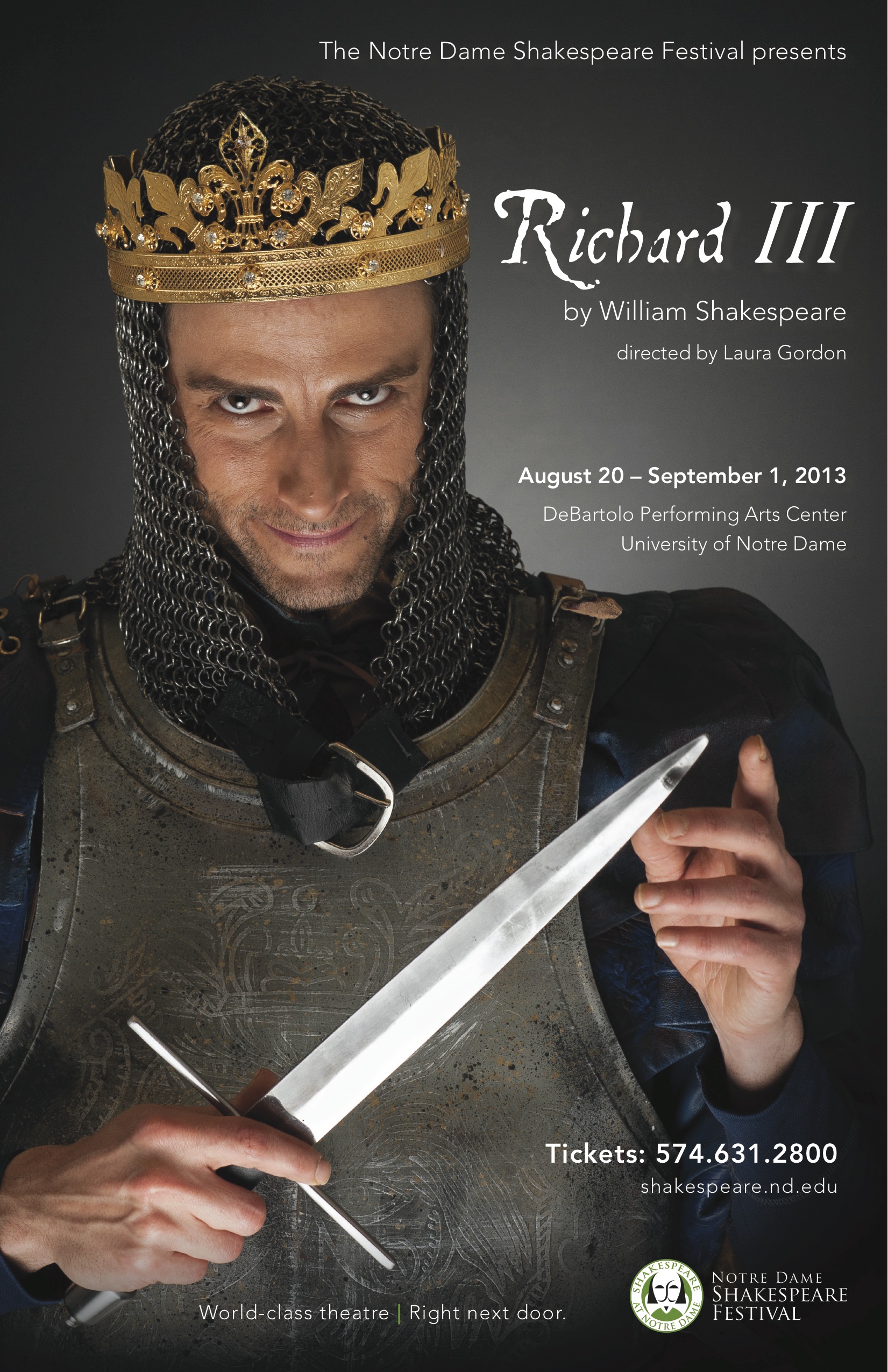
History – “Richard III” (Check out “Looking For Richard” by Al Pacino) (Richard III is unique as a Shakespearean villain. He's not out for revenge, like Iago, he's not manipulated like Macbeth, no, Richard III does what he does because he's bored, and he can. He reminds me of Moriarty from the BBC's "Sherlock." He's incredibly smart, charming, and gets off on manipulating, and bringing down the people around him. He makes the audience complicit in his actions, tells us exactly what he's going to do, and then manages to manipulate us TOO as he's doing it, then turns to us and says: "See what I just did! Wasn't that awesome?!" We don't sadly watch him ruin his life, we, somehow, enjoy the destruction he causes, even as it destroys him. 


Top Five Musicals


1.)   Wicked(This is a very personal show for me, and had a great impact on me for a lot of reasons when I first saw it with the original cast. I know the show has gotten some flack, but I just think it's so beautiful, and explores a type of crusader-like character that we don't get to see very often.)
2.)   Into The Woods(I mean, it's Sondheim does fairy tales. Who's surprised here? :) )
3.)   Damn Yankees” (The first “adult” musical I ever saw, and ever performed in. The show that introduced me to Gwen Verdon, Bob Fosse, and the idea that musical theater could be a serious, adult art form – and didn’t just consist of shows for children (my earlier experience with musicals had been, appropriately, “Annie,” “Peter Pan,” etc.)
4.)   Pippin(A beautiful, moving, commercial but experimental show that brings together two of my favorites - Stephen Schwartz, and Bob Fosse.)
5.)   I’m still saving this spot ;) Haven’t decided yet.


Top Five Films
(In order – with #1 being my favorite)

1.)   Pan’s Labyrinth(I don't even know what to say about this film. It's so beautiful. And I really appreciate that it doesn't shy away from (what I term) a "Lord of the Rings-esque" ending. To me, LOTR has the best ending of any story I've ever read - because it's beautiful, but real. You don't return from a great trial unchanged. Things don't go back to the way they were. There is hope, and love, but there is also a truly great cost. The ending to "Pan's Labyrinth" is joyously bittersweet. And I think expresses a part of the human condition that is incredibly difficult to explore. I saw this film multiple times in the movie theater - and that's a very big deal for me.)
2.)   The Lord of The Rings” – esp. “Return of the King” (See above.)
3.)   The Little Mermaid(This is my all time favorite story, and was my first exposure to the amazing Howard Ashman. Enough said.)
4.)   Tie between “Apollo 13,” “A League of Their Own"Heavenly Creatures" and “The Wizard of Oz.” I know, I’m cheating. (These are all just really good, brilliant films.)
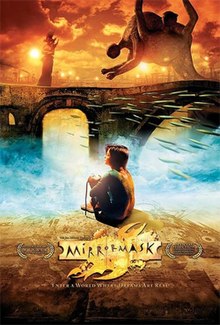
5.)   Mirrormask(Like “Till We Have Faces” (see books) – you will either love this movie, or hate it. There’s no in between. It’s a little “trippier” then the films I tend to generally go for, but in this movie, it really works.) ("Mirrormask" was my introduction to Neil Gaiman. Asked by Lisa Henson to do a "modern day "Labyrinth"-like film" Neil Gaiman and Dave McKean have come up with a remarkably out of the box film. Where as "Labyrinth" is so bad it's brilliant, "Mirrormask" is just brilliant. I think it mixes one too many stories together (it's kind of "The Prince and the Pauper" meets "Alice in Wonderland" meets "The Wizard of Oz") it's a testament to the film that I don't really mind.


Top 5 Books/Stories
(In order – with #1 being my favorite)
Note: This is a REALLY hard one for me to pick only five.


1.)   Till We Have Faces” – by C.S. Lewis (This book will either become your favorite book ever, or you’ll hate it. There’s no in between.) (A retelling of the myth of Cupid and Psyche (the earliest basis for "Beauty and the Beast) - Lewis considered this his greatest work. A study of sacred vs. profane love, I still don't think I fully grasp this book - and it's one of the reasons I re read it so often. And it describes certain emotional experiences in a way I've never heard better described.)
2.)   The Little Mermaid” – by Hans Christian Anderson (actually, lets just list all the classic fairy tales – collected works of the Grimm Brothers, and Anderson esp. as #2) (This is pretty much the only fairy tale that doesn't have a happy ending. No, she doesn't get the Prince in the end. This is a beautiful story about the true nature of love, and sacrifice, and it's always spoken to me in a very special way. And as we all know, I adore fairy tales in general.)
3.)   The Giver” – by Lois Lowry (This book does two things stunningly right - it creates a truly seductive distopian world that, ironically, kind of works. Yes, it's a distopia - meaning there are a lot of dark things hiding below the surface, but this is a world that has successfully gotten rid of poverty, hunger, unemployment, class, and race distinctions. At the same time it explores issues of the power and danger of choice, and the nature of emotion and humanity. There are no crazy chase scenes, no trying to topple a regime - just a little boy who has to learn how to feel. And must decide whether feelings are in essence dangerous, or liberating.
4.)   The Great Divorce” – by C.S. Lewis (A short book - you can read it in one sitting. This story dares to explore the idea that the damned are in fact damned by choice. What could cause someone to chose a life in hell? Turns out, for reasons that are uncomfortably relatable. Whatever your religion or spiritual beliefs, this is a brilliant book that gets to the heart of what sin and salvation are - and it's much more complicated then we like to think.) 
5.)   Never Let Me Go” – by Kazuo Ishiguro (This book has some of the most emotionally moving passages I've ever read. I won't give away the plot - big twists and spoilers, but in essence it concerns three life long best friends: Cathy, Tommy and Ruth who live their short lives from beginning to end through out the course of the story. Having, or not having time is a big issue - and the relationship between Cathy and Tommy was so moving to me, I even named a character in one of my plays in honor, and reference to the Tommy in this book. There is a film version - that I must recommend for the beautiful performances of Carey Mulligan and Andrew Garfield - but important parts of the plot, and much of the language are left out - so please read the book first.)

Especially honorable mentions: “Matilda” by Roald Dahl, (If you ever want to know what I was like as a child, read "Matilda.") “Jane Eyre” by Charlotte Bronte, “Walking on Water” by Madeline L’Engle, “Alice in Wonderland” by Lewis Carroll, “The OZ Books” by L. Frank Baum, “A Wrinkle In Time” and “A Wind In The Door” by Madeline L’Engle, “To Kill A Mockingbird” by Harper Lee


Top 5 TV Shows
(In no particular order)


1.)   Dead Like Me(A sadly short lived series, Georiga Lass is a rather sullen eighteen year old who ironically is forced to get her life together only when she dies and is recruited as a grim reaper. Beautifully deals with life and death in a tragi-comic setting. And did I mention it stars Mandy Patinkin?)

2.)   Slings And Arrows” (A send up of the Stratford Shakespeare festival in Canada - each season follows one main, and one secondary show being put up by the festival - and real events backstage mirror the themes and events of the Shakespeare play being put on (season 1 is "Hamlet" - in which the ghost of the old artistic director begins haunting his successor and protoge Jeffry Tennant, season 2 is "Macbeth," and season 3 is "King Lear." The show stars brilliant Canadian actors (including a beautiful Rachel McAdams before she was famous.) And if that's not enough to convince you, check this out: 

3.)   Sherlock(A modern update of the classic "Sherlock Holmes" stories - you must see this show to understand it's brilliance. Each season consists of three hour and a half length episodes - so it's more like three movies a season then a series of episodes. And it stars Benedict Cumberbatch (see "Frankenstein" above.)
4.)   United States of Tara (Starring Toni Collette this show is about Tara - a kind, smart American wife and mother who has multiple personality disorder. Also a tragi-comedy, the show gives Collette the opportunity to play characters as diverse as a slutty teenage girl "T," to a gentlemanly red neck man named "Buck." A tour de force performance. Brilliant, and deeply moving.)
5.)   I’m using #5 as my collective “Sci Fi” category – including: “Star Trek: The Next Generation,”Stargate Universe,” and “Dr. Who” (spec. the David Tennant years)

Also a very special honorable mention must go to Shelley Duvall's "Faerie Tale Theater." (Starring the likes of Robin Williams and Vanessa Redgrave - yes, in EVERY EPISODE, "Faerie Tale Theater" masterfully tells the classic fairy tales - and ones you've never heard of before, highly accurately to the original source material.


Top 5 Authors (not playwrights – for that, see top plays)
(#1 is my favorite. The others are in no particular order)


1.)   C.S. Lewis
2.)   Madeline L’Engle
3.)   Neil Gaiman
4.)   J. R. R. Tolkein
5.)   I am still debating who should take this spot ;)  

Wednesday, June 5, 2013

"Happy Ending"

Hey everyone! The acoustic demo of my new song "Happy Ending" is now up! It's an independent piece, but may wind up in a show I'm working on. :) Check it out!


Monday, May 27, 2013

How To Write Women


So, a male screenwriter friend of mine asked me to do a blog entry on suggestions for writing women. I thought this was an awesome, very astute, and sensitive thing for him to ask. And then became a bit daunted by the task.

Writing women, especially where film is concerned, has become a very important topic. There has been numerous discourse about the fact that, percentage wise, many, if not most women are relegated to the “damsel in distress” arm candy role – pretty, hot girls whose only function is to be the “reward” the guy gets at the end. The first “Transformers” movie, and the role Megan Fox portrays usually serves as the first example cited. If you haven’t heard of the Bechdel Test (a test that helps identify gender bias in mass media) this is it:


Take a minute and think through some of the most recently released films. Start with “The Avengers.” Do they pass?

SIDE NOTE: There are times when it is totally justified that a story not pass the Bechdel test. Someone brought up "Romeo and Juliet." I would argue that the conversations between Juliet and the Nurse do actually pass the test - although Romeo/Paris are important to all their conversations, they are not talking about "OMG - he's so cute. I want him!" "No I want him!" They are using those men to explore deeper issues about their relationship - and about Juliet's life choices. In the "The clock struck nine when I did send the nurse" scene - the nurse basically talks about everything BUT Romeo for the vast majority of it. And keep in mind - though "Romeo and Juliet" is a love story, at it's heart it's a story about the tragedy of blind feuds. But in essence, the Bechdel test is good generally - and it's really good for talking about the majority of Hollywood "moneymakers." But it's just a guide - and no simple guide is going to solve the problem. But if you choose to not follow it make sure it's exactly that - an informed choice. 

The discussion gets more complex when you start looking at films like “Sucker Punch” – which claims to be a movie about female empowerment, but which depicts said females as “erotic fan boy stereotypes.” Personally, I actually really liked “Sucker Punch” – and I think it had some positive things to say, even though it may not have accomplished it’s “female empowerment” goal as successfully as it could have.


The point is, I think most of us can agree that women are not always portrayed well. We can’t all agree on how best to rectify that. I’m not really totally sure myself. Sometimes it’s more difficult to talk about how to write what you ARE then what you’re not. But for what it’s worth, here’s my two cents.

First of all, take a brief interlude, and go watch/read the following:


Ted Talks: How Movies Teach Manhood


And:


 Vs. 
                  (And no, "but there are more women in the second one" is not the right answer.) 


No, seriously, go. I’ll wait.


You done?


Awesome.

Well, I thought I’d start by trying to think of some examples of well-written female characters. And I thought the most effective way to do that would be to start with the female characters I’ve identified with the most through out my life. This is a personal list – this doesn’t mean that these are THE BEST female characters. This doesn’t mean that every woman will identify with these characters. It just means that I do. This includes films, stories, musicals, etc.

Ofelia – “Pan’s Labyrinth”
Joan of Arc
The Little Mermaid (original Hans Christian Anderson story)
Elphaba – “Wicked”
Matilda – “Matilda” (the book)

And, there are male characters I identify with as well:

Frodo – “Lord of the Rings”
Katurian – “The Pillowman”

are just two examples. When someone asks me who I’d love to play in the musical “Into The Woods” the answer I want to give is The Baker, or in “Pippin,” Pippin. Two male characters.

Yes – there are major themes connecting all these characters. Those are the themes I most strongly identify with personally. Everyone has their own.

Interestingly, there are many articles discussing the fact that since there are usually more male characters in a story then female (often there is just the “token” female,) most women grow up learning to identify with a male character. “Ok, no women I relate too, I’ll just relate to him.” (Please note: This, as with points made through out this entry is not a hard and fast rule. In fact, sometimes trying to "break" gender bias convention ends up causing more of a problem. There are more women in "Oz The Great and Powerful" then in "The Wizard of Oz." But it's still a far poorer film at portraying women.) It’s the same with any under represented group. So sometimes I wonder, when and how do men relate to female characters? Does a little boy watching “The Wizard of Oz” more strongly relate to, say, the Scarecrow – because he’s a boy, or to Dorothy – because she’s the protagonist? I tend to relate more to Frodo then Arwen, or more to Spiderman then Mary Jane. I remember being in great turmoil as a child because I could never decide if I would rather be Peter Pan or Wendy. I’m still not sure.

And I think that’s an interesting place to start. If you’re unsure how to write female characters – or just want to get better at it, make a list of all the female characters you identify with. For example, if you were an actor, and a woman, what roles would you like to play?

Then really start thinking about WHY you relate to that character. Why do you like them? What do you identify with? The truth is, both genders can be stereotyped. Think of same gender characters you really don’t relate to – and figure out why. Now think of opposite gender characters you don’t relate to – and figure out why. Take physical characteristics out of the equation. Imagine playing that part. Would you want to? Why or why not?

A really hot topic right now is female empowerment, especially in film. Now, I’m all for female empowerment. But the second I, or anyone else tries to write an “empowered female” – that being the sole goal – I’ve probably just killed any chance of ACTUALLY writing an empowered character. First and foremost you have to write a good, well-rounded character with an arc. The truth is, the vast majority of politically correct female characters I’ve seen recently, actually feel more offensive, and politically INcorrect to me as a woman. I’m a huge fairy tale fan (that’s a blog in and of itself.) I found the Snow White character in “Snow White and the Huntsman” – you know, the supposed “bad ass” Snow with a sword in her hand FAR more politically incorrect then the Snow in the original story. Putting a sword in her hand doesn’t make her a relatable character. And you’ve completely missed the METAPHORIC significance of her journey in the original story. I found that Snow White to have no personality, no real want, and really, nothing I could relate to, or empathize with. Where as I do with the Snow in the original story - even though her character is far from fleshed out. On the flip side, I find Ginnifer Goodwin’s Snow in the T.V series “Once Upon a Time” to be both an empowered bad ass, AND to have all the metaphoric elements inherent in the original story. But that’s because the creators of the show did more then just put a sword in her hand (which they do within the first five minutes of the pilot) – they gave her a well rounded character with strengths and flaws and wants and thoughts and feelings. She has an arc to her character. She grows and changes. She’s strong, she’s funny, she’s vulnerable. Yes, I said she’s strong AND vulnerable. Women, just like men, can have contradictions. It makes them interesting. Just like real people. And being vulnerable doesn't make her weak. 

"Snow White and the Huntsman"/Traditional Fairy Tale
                                                       Ginnifer Goodwin - "OUAT" 

What does empowerment mean for a woman? Is it different then for a man? I’m not sure. All I know is that simply transposing a masculine stereotype of “empowerment” onto a woman is not actually empowering that woman. I find the final scene of “Pan’s Labyrinth” – in which a young girl (Ofelia,) confronted by her abusive step father who is holding a loaded gun refuses to hand over her infant baby brother to him to be one of the most empowering scenes I’ve ever seen. A simple word: “No,” with the brave acceptance of the consequences such defiance will incur does more then an armory of swords and guns ever could. Simply giving a girl a weapon doesn’t make her empowered. It can make her a “fan boy fetish” just as easily. I think this can be true for both genders. I find the moment when Harry Potter walks into the forest to sacrifice himself for his friends far more meaningful and empowering then all the epic wand battle scenes.

                              vs.     
                              Ofelia - "Pans Labyrinth"                   Megan Fox in...something

On the flip side, (as my screenwriter friend pointed out) many writers write women as damsels in distress even though they don't realize it. Since often women aren't the protagonist of the film (or sometimes even when they are,) they end up being written as reactionary, and passive instead of proactive. Stuff happens TO them. They don't DO stuff. Interestingly this is one of the issues I have with Kristen Stewart's Snow White in "Snow White and the Huntsman." Check out the film - then tell me what she actually DOES to advance her story. Yeah, she's a little feisty. She tries to escape those who are trying to hurt her - but she is in reality basically lost and confused until she meets a bunch of guys who are like: "follow me, I'll show you where to go." Then these same men go: "You're THE ONE - you have to lead us to victory." And Snow just goes along for the ride. Even the moment where she defeats the Evil Queen is basically an accident. This Snow - even though she has a sword in her hand, is really at heart a damsel in distress. "The Wizard of Oz" is the opposite. The Scarecrow, Tin Man and Lion - the "side kicks" are all given moments to be proactive. Even the Lion - who is kind of depicted as a male damsel in distress for most of the movie - has moments of driving the action forward.

And now I come to my most important point.

Above all, there must be a care, and empathy for your subject whenever your subject is “other” then yourself. This is true of a character who is another gender, race, age, ethnicity, etc. Portray women as human beings. Think about your mothers, your sisters – what are their deepest fears? Secrets? Dreams? How do they process and express their feelings? How is it different then you? I’ve had to do that in reverse to write my male characters. And it always stems from empathy. Taking the physical out of it, what do I love about men? How would the men in my life process X differently then me? I’ve never had to deal with the pressure to “be a man” in contemporary society. But my friends have – and I can empathize with that. I may never have to deal with needing to prove my masculinity, but I have had to deal with feeling like I needed to prove myself to be “worthy,” “strong,” “what I’m supposed to be” – and I use that to inform my characters. I think when we stop thinking of women as objects in life – they’ll stop being portrayed as objects on film.


So here’s what it boils down to:

1.) Unless there is a GOOD reason why, make sure everything you write passes the Bechdel Test. And even if your plot demands that not all three elements can be met, you MUST give your female character(s) something that’s driving them besides a man. I think the films of Miyazaki (“Princess Mononoke,” “Spirited Away”) are brilliant examples of stories where there is a romance, AND the stories pass the Bechdel test with flying colors.

2.) Give every character you write an objective, and an arc. No matter how minor they are. Have at least five adjectives that describe every character.

3.) Tell a good story first and foremost. Don’t TRY and empower/make politically correct/etc. women. Tell a good story with good characters. Everyone will disagree on what empowerment is. But if you tell an effective, moving story – you can’t have gone too far wrong.

4.) Make your women active. Even if they're not the primary driving force behind a plot, give them thoughts, ideas, actions. Don't make them purely passive and reactionary.

5.) Most importantly empathize. Writers have been taught for years to understand and empathize with their characters – no matter how “evil” they are. Well, do the same for gender opposite characters. Care about them. Understand them. Empathize, and relate to the real women around you. Talk to them, ask them questions. Then write real characters. There are no hard and fast rules. There can be damsels in distress. There can be attractive women. Just like there can be dumb tough guys. But the point is, that can't be ALL they are. It's difficult sometimes to understand the opposite gender. It's also difficult to understand an alien, or a murderer, or a fairy. But that's our job as writers. Care for women in real life. Do your best to understand the women around you. Then you can start to write female characters that will matter to everyone. 

On a side note - this was recently brought to my attention. Thought it was worth adding to the discussion: